

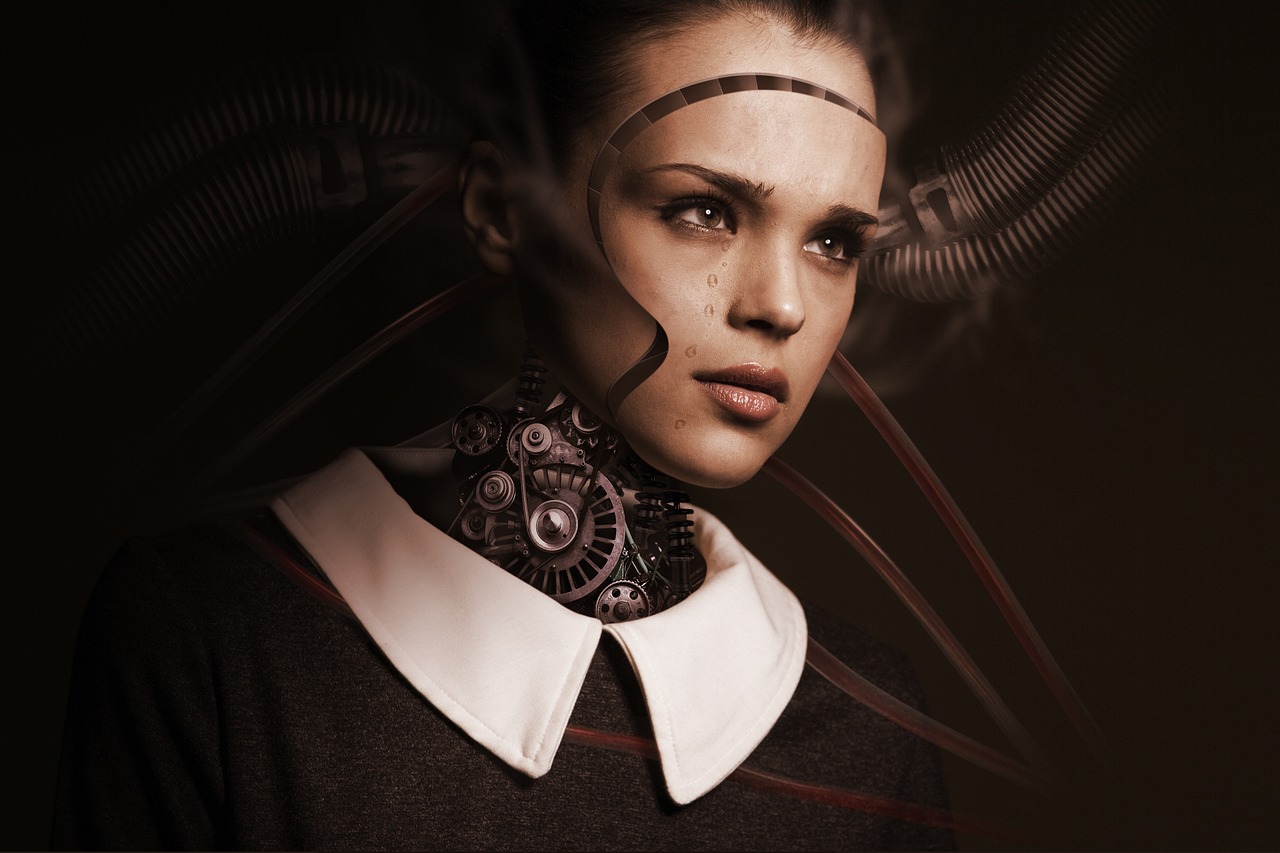
Artificial intelligence no longer speaks about education — it speaks within it.
In every classroom, every screen, and every assignment, AI is quietly reshaping how we learn.
Its presence is not just a technological shift but a philosophical challenge to the very nature of learning.
The question is no longer how to access knowledge — but how to think about it.
Democratizing Knowledge or Automating Thought?
AI’s first promise to education was personalization and democratization.
It allowed students to learn at their own pace, transcend language barriers, and access vast knowledge without privilege or geography.
Information is no longer reserved for the few — it belongs to anyone with a connection.
Yet this same democratization is creating a new intellectual divide:
between those who use AI to deepen understanding, and those who let it think for them.
ChatGPT can produce an essay in seconds — but understanding takes time, and it is precisely that slowness that makes learning ethical.
Education as the Art of Questioning
The 20th-century Brazilian philosopher Paulo Freire, one of the leading thinkers in critical pedagogy, viewed education as either a practice of freedom or a tool of conformity.
In his critique of the “banking model of education,” Freire argued that teachers deposit information while students passively receive it — becoming containers rather than creators of knowledge.
He proposed instead a problem-posing model, where learners engage in dialogue, question the world, and transform both knowledge and themselves.
Freire’s philosophy offers a sharp mirror for understanding AI in education.
Artificial intelligence can empower students through access — but when it begins to think on their behalf, it risks reproducing the digital version of the banking model.
If students treat AI systems merely as “answer generators,” learning becomes a transaction, not a relationship.
Freire’s notion of conscientização — critical consciousness — is the capacity to remain in dialogue with knowledge and the world.
This consciousness cannot be automated; it arises through questioning, uncertainty, and reflection.
True learning is an ethical process precisely because it involves struggle, curiosity, and vulnerability — things no algorithm can replicate.
 Harm or Transformation?
 Harm or Transformation?
AI can disrupt rote memorization and encourage creative exploration.
But it can also feed a culture of passivity.
The real issue lies not in the technology, but in human intent.
Does the student use AI to expand curiosity, or to escape the effort of thinking?
That is where ethics begins.
Aristotle’s notion of phronesis — practical wisdom — means turning knowledge into action.
AI can accelerate that process,
but if it erodes our courage to think for ourselves (sapere aude), then learning becomes imitation without insight.
The Future Classroom: A New Dialogue Between Human and Machine
AI should not replace the teacher — it should serve as a mirror for the learner.
It can reveal mistakes, suggest ideas, and expand creativity, but it must never decide for us.
As philosophers Andy Clark and David Chalmers argue in their “Extended Mind” theory, technology can extend human cognition.
Yet for this extension to remain ethical, intention and judgment must stay human.
No system, however advanced, can simulate intuition.
The future of education lies not in replacing thought with computation,
but in a deeper dialogue between human and machine.
AI may redefine what it means to learn —
but only if we refuse to outsource the responsibility of thinking.
AItoHope Perspective — Learning Beyond Automation
At AItoHope, we see education not as a race for technological speed but as a practice of remaining human.
AI is not a substitute for thought — it is a mirror that helps us rediscover what thinking means.
The question is not how fast we find the answer,
but how long we can keep asking better questions.
Ethical education does not mean rejecting technology,
but using it to strengthen dialogue, creativity, and critical thought.
In the classrooms of the future, the most important intelligence will not be artificial —
it will be the depth of the human mind that refuses to stop thinking.


